Burma's Rohingya: Exiled to Nowhere
Millions of refugees around the world languish in squalid camps without rights or representation, but photographer Greg Constantine has devoted his life to documenting their plight and giving voice to all these Forgotten People.
By Ron Gluckman / Bangkok,Thailand
F
OR MANY, PHOTOGRAPHY is a craft. For others, it's a calling. For Greg Constantine, it has become a mission, focusing his lens like a beacon on the world's forgotten people.
 For much of the past decade, Mr.
Constantine has roamed the world, documenting "Nowhere People," subjects who
reside on the lowest rungs of the ladder of hopelessness, stateless souls caged
in refugee camps and denied basic human rights.
For much of the past decade, Mr.
Constantine has roamed the world, documenting "Nowhere People," subjects who
reside on the lowest rungs of the ladder of hopelessness, stateless souls caged
in refugee camps and denied basic human rights.
From Asia to Africa, Mr. Constantine's powerful portraits give these marginalized people a voice. They range from the lowest-caste Dalit in Nepal, to Nubians who served the British Empire with distinction but then languished for generations in squalid ghettos in Kenya.
Nowhere has his documentary style proven more compelling than with the Rohingya, the subject of his haunting book and exhibition, "Exiled to Nowhere," which recently was on show in Tokyo.
The Rohingya are Muslims living mostly in the turbulent region straddling Bangladesh and Burma. Citizens of neither place, they are treated as non-people by both, and are subject to abuse, confinement, dispersion and trafficking.
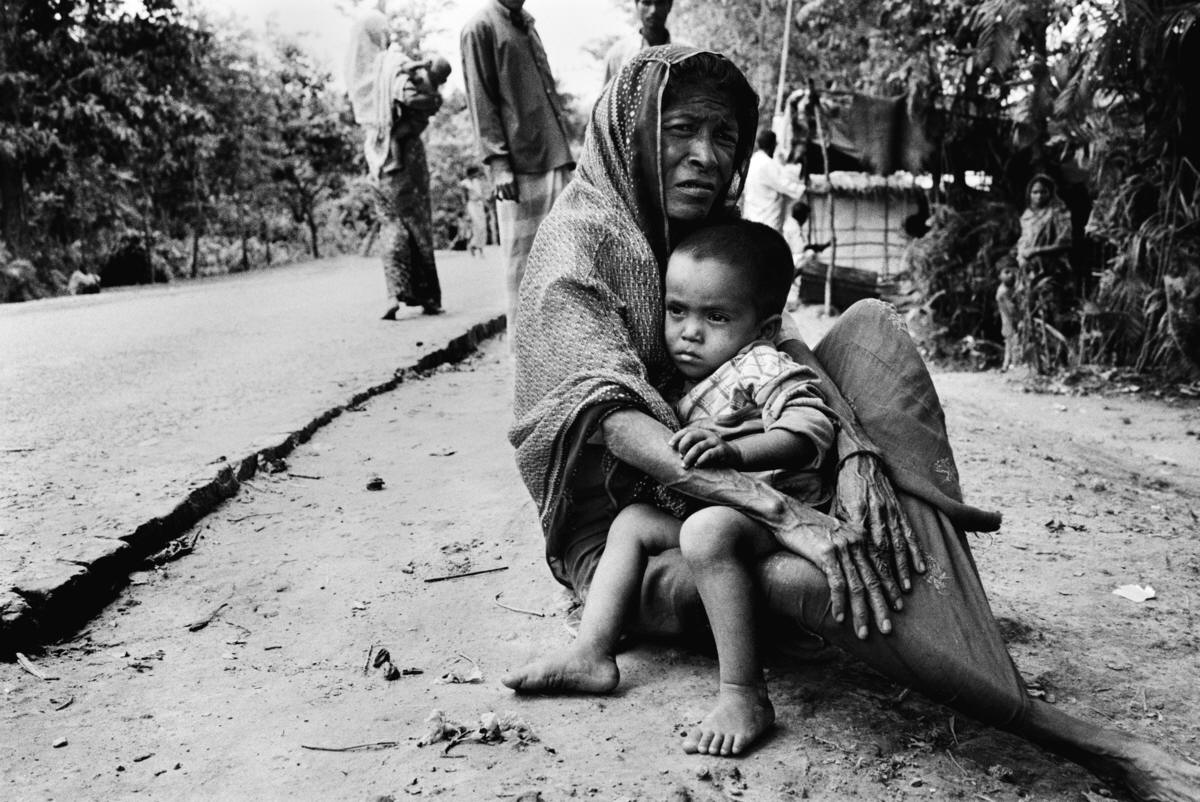 This has been a tragedy for
generations, but their plight has worsened with recent outbreaks of violence in
Burma that have displaced more than 130,000 Rohingya, according to human rights
groups. Burmese authorities have been accused of colluding with nationalist
Buddhist groups in these campaigns of ethnic violence.
This has been a tragedy for
generations, but their plight has worsened with recent outbreaks of violence in
Burma that have displaced more than 130,000 Rohingya, according to human rights
groups. Burmese authorities have been accused of colluding with nationalist
Buddhist groups in these campaigns of ethnic violence.
The atrocities have fueled calls for renewed sanctions on Burma, where embargoes were lifted after the military government launched radical reforms and promised a path to democracy. Nobel Laureate Aung San Suu Kyi has been stung by rare criticism for failing to do more to halt the persecution of the Rohingya.
Mr. Constantine, 43, a self-taught photographer from Carmel, Indiana, who has devoted eight years to these Nowhere People, doesn't offer any answers, only more concerns. "The Rohingya are in the news whenever something horrible happens, then they evaporate from view until the next horrific event," he says. "I really hope that changes, but I'm not incredibly hopeful."
Worse, Rohingya abuse is pervasive in the region. Human rights groups have long accused authorities in southern Thailand of collusion with gangs preying upon hapless Rohingya refugees, who are sold to slave rings.
 The Thai Navy last year intercepted an
estimated 130 refugees in a boat and allegedly pushed them back to sea, without
food, water or petrol, to face almost certain death. Footage allegedly shot on a
cell phone by a Navy crewman went viral and brought widespread condemnation.
The Thai Navy last year intercepted an
estimated 130 refugees in a boat and allegedly pushed them back to sea, without
food, water or petrol, to face almost certain death. Footage allegedly shot on a
cell phone by a Navy crewman went viral and brought widespread condemnation.
In April, Reuters received a Pulitzer Prize for its coverage of this Rohingya tragedy. Two journalists at the online publication Phuketwan were subsequently indicted under Thailand's strict censorship laws largely for reprinting Reuters' award-winning coverage. This week, police in Phuket said indictments would be forthcoming for Reuters as well.
Amazingly, Mr. Constantine's coverage has remained free and forceful, even in Thailand, where he exhibited "Exiled to Nowhere: Burma's Rohingya" in March. Dozens of wall-length black and white photographs were paired with short, powerful captions, quoting Rohingya.
"God created many species, and every species has a place to live. Ants and snakes have a hole. Fish have water. Tigers and bears have bushes. But Rohingya don't have anywhere to live," a man named Monzur was quoted as saying. "We want to ask the world, where is our place?"
Philip Calvert, Canadian Ambassador to Thailand, whose embassy supported the exhibit in Bangkok, spoke at the exhibit's opening and praised Mr. Constantine for "putting a human face on this horrific situation." Mr. Calvert later said the Association of Southeast Asian Nations should press all nations in the Rohingya crisis to begin dialogue on a resolution. Many have urged Asean to pressure Burma, even ban the country from the group, until action is taken. But last week, Burma kept the Rohingya off the agenda as it hosted the annual Asean summit for the first time.
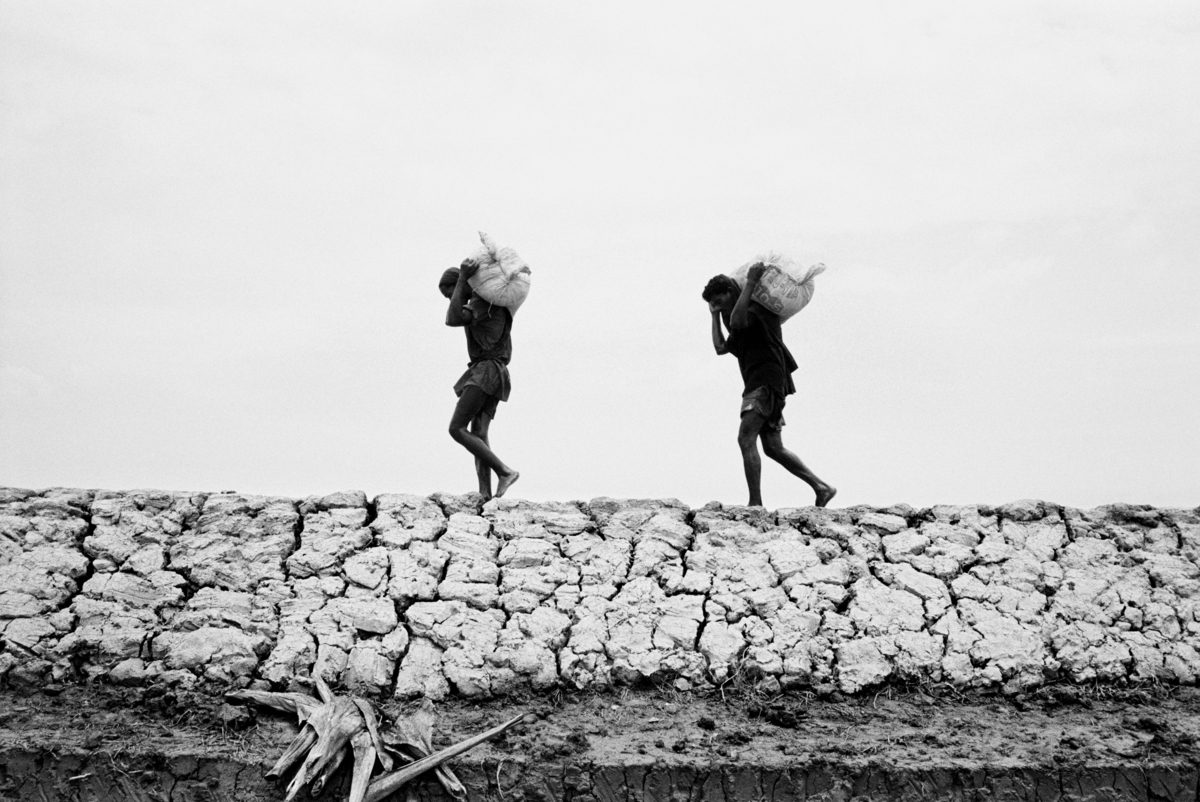 Still, Burma hasn't managed to muzzle Mr. Constantine. Last November, his
Rohingya portraits were showcased at the Holocaust Museum in Washington D.C.
Burma lodged an official protest, outraged at any suggestion of genocide
regarding its treatment of the Rohingya. Mr. Constantine's images were
projected on the outer walls, highly visible not far from where President Barack Obama
hosted Burma's President Thein Sein only months previously.
Still, Burma hasn't managed to muzzle Mr. Constantine. Last November, his
Rohingya portraits were showcased at the Holocaust Museum in Washington D.C.
Burma lodged an official protest, outraged at any suggestion of genocide
regarding its treatment of the Rohingya. Mr. Constantine's images were
projected on the outer walls, highly visible not far from where President Barack Obama
hosted Burma's President Thein Sein only months previously.
Since November, the exhibit has been shown at the European Parliament in Brussels and in Jakarta. Everywhere it is displayed, including in the coming two weeks in Tokyo, Mr. Constantine gives talks and holds workshops to promote better understanding of statelessness and the Rohingya.
He realizes this mission remains unaccomplished. "It has been incredibly disheartening at times," confesses Mr. Constantine, who has made 10 trips to document the Rohingya. "Every year, the situation for the Rohingya gets worse."
He chalks it up to political will, which is "just absent…. It's sacrificed by everyone wanting to get a piece of Burma, and the reality is nothing has really changed that much in Burma. The Rohingya shows that."
Ron Gluckman is an American reporter who has been roaming around Asia since 1991, for various publications, including the Wall Street Journal, which ran this story on May 15, 2014
Photo of Greg Constantine (at Bangkok exhibit) by Ron Gluckman, rest courtesy of Greg Constantine
Be sure and visit www.exiledtonowhere.com
All words copyright RON GLUCKMAN
To return to the opening page and index

push here
[right.htm]